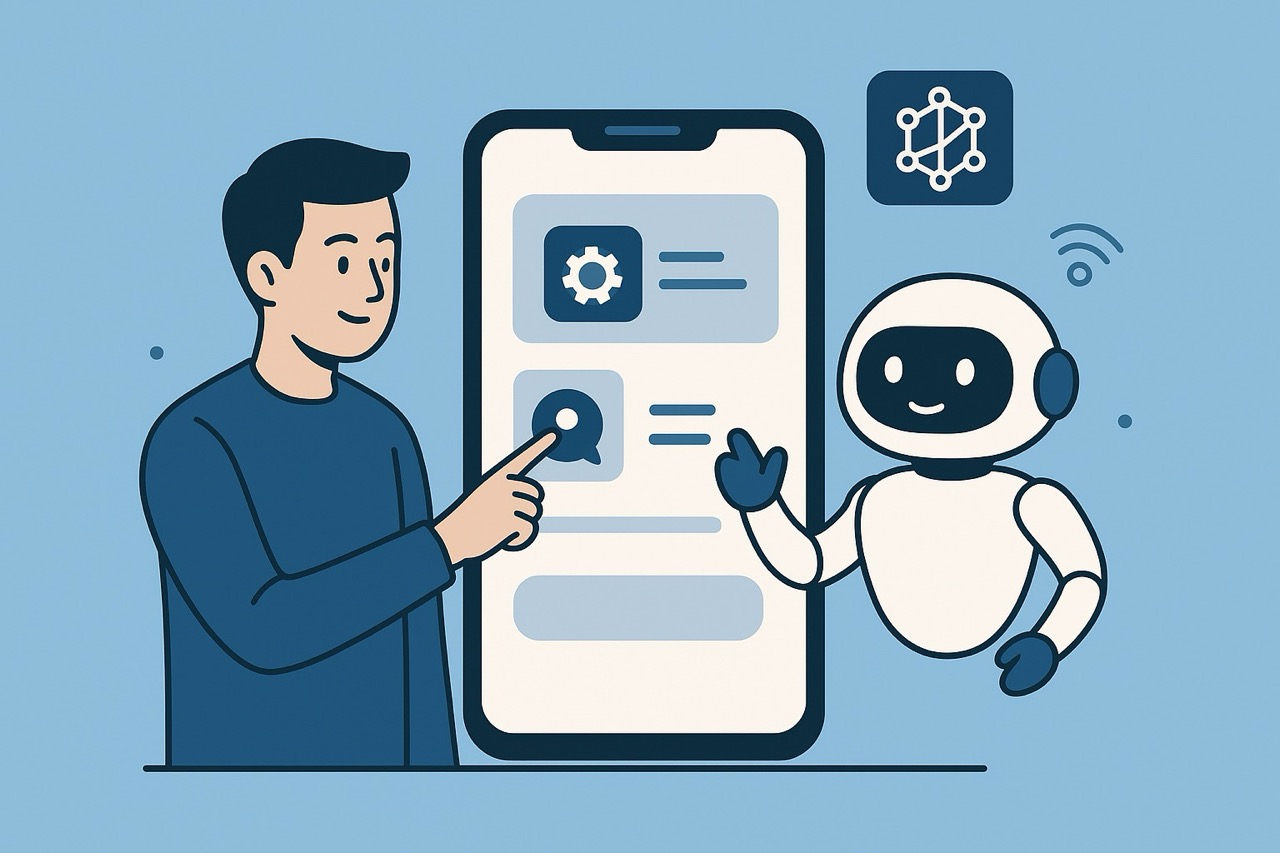
Mobile AI agents are emerging as one of the most transformative technologies in modern software development. These systems can control Android and iOS devices autonomously, navigating apps, understanding UI layouts, tapping, scrolling, filling forms, and executing full workflows using natural language commands.
What began as simple automation has evolved into intelligent agents capable of reasoning, planning, and interacting with apps like real users. As of late 2025, the field is accelerating quickly — with new frameworks, research breakthroughs, and real-world use cases appearing every month.
In this article, we break down the current state of mobile AI agents, the tools shaping the ecosystem, what’s coming next, and what this means for developers, businesses, and users.
1. Leading Mobile Agent Frameworks Today
Mobile AI agents have quickly evolved from experimental tools into production-ready frameworks. Two systems — Droidrun and Mobile-use — are currently setting the standard for what’s possible in 2025.
Droidrun
Droidrun is one of the most capable end-to-end frameworks for controlling Android and iOS devices using LLM reasoning. It combines vision models, action planning, and device execution into a single workflow, making it suitable for complex or authenticated mobile tasks.
Highlights
- Uses ReAct-style reasoning (think → act → observe)
- Can understand full screens via screenshot vision mode
- Works with major LLMs: OpenAI, Anthropic, Gemini, DeepSeek, Ollama
- Offers detailed trace logs to help interpret or debug agent behavior
- Runs on emulators or real devices, locally or in the cloud
- Well-suited for multi-step flows and login-protected apps
Popular Use Cases
- Automating onboarding or verification flows
- Replacing manual end-to-end mobile testing in CI/CD
- Extracting data from apps that don’t expose APIs
- Remote device troubleshooting and support
Limitations
- iOS setup is more involved and less polished
- Vision models may misinterpret heavily custom animated UIs
- Costs grow with frequent LLM calls and device usage time
Mobile-use (Minitap)
Mobile-use is the leading open-source option, known for being lightweight, reliable, and highly configurable. It performs exceptionally well on the AndroidWorld benchmark and is easy to extend or self-host — making it attractive for developers and research teams.
Highlights
- Controls apps through natural-language commands
- Understands UI layouts using accessibility nodes
- Extracts data as structured JSON
- Supports multiple LLM providers via config
- Simple Android setup using Docker
- Executes physical interactions using Maestro (Maestro is an automatic tester.)
Use Cases
- Automated QA and regression testing
- Repetitive task automation inside enterprise apps
- App scraping when APIs aren’t available
- Embedding AI helpers directly inside mobile apps
Limitations
- Relies on accessibility data, which may be incomplete
- iOS support is limited and simulator-only
- Sending screenshots/UI data to cloud models can raise privacy concerns
2. Research Breakthroughs (2024–2025)
Recent research has pushed mobile AI agents far beyond simple automation. Several innovations are shaping the next generation of reliability and safety:
-
Verifier-Driven Agents (V-Droid): A second LLM double-checks each planned action before execution, reducing hallucinations and unsafe clicks.
-
Memory-Augmented Planning (MapAgent): Agents now store and reuse “page memories,” allowing them to navigate long workflows without getting lost.
-
Formal Action Verification (VSA): Natural-language instructions are converted into a small, formal instruction language to ensure actions are valid and predictable.
-
Hybrid Local + Cloud Execution (CORE): Sensitive steps run on-device for privacy, while heavier reasoning and vision tasks run on cloud LLMs.
-
Commercial Hardware Integrations: Brands like Honor are shipping devices with built-in AI agents — an early sign that agent-native OS features are on the way.
These breakthroughs collectively make agents safer, more stable, and more capable of completing real tasks across apps.
3. How Mobile Agents Will Transform App Development
Mobile agents aren’t just automating clicks — they’re changing how users interact with apps and how developers build them.
• Smarter Personal Assistants Agents can move across apps on behalf of users: messaging, scheduling, filling forms, managing emails, even handling banking tasks from a single natural-language request.
• Mobile RPA for Business Companies can automate mobile-only workflows (like POS dashboards, loyalty apps, vendor tools) even when no API exists.
• Reinvented QA & Testing Instead of manual testers repeating steps, agents can run full scenarios:
“Test the checkout flow with 10 addresses.”
• Multi-App Automation Agents can combine apps into unified workflows:
“Book a flight, add it to my calendar, compare hotels, and send the screenshot.”
• Better Accessibility Hands-free device use becomes possible for users with mobility challenges.
• Research & Data Collection Agents can simulate user behavior or extract structured data from apps.
• Automated Compliance & Security Checks They can routinely verify permissions, flows, or payment steps to ensure everything works and stays compliant.
These shifts mean that mobile agents will gradually become co-pilots inside the OS, handling tasks that used to require human tapping.
4. Challenges & Risks
As powerful as agents are, they introduce real risks developers must address:
• Privacy Concerns Screenshots, UI trees, and form data may include personal information — especially when processed by cloud models.
• Security Risks If misconfigured, an agent could perform unintended actions, like deleting data or making purchases.
• Reliability Issues Agents still struggle with ambiguous UI layouts, animations, or highly custom designs.
• Cost Constraints Running LLMs — especially with vision — on every step can get expensive at scale.
• Performance Limits Cloud models add latency, and on-device models remain smaller and less capable.
Despite these challenges, rapid improvements in on-device models and new safety layers are reducing these risks each year.
5. What This Means for the Future of Apps
Mobile AI agents will change how apps are built, tested, and experienced across every part of the ecosystem.
For Developers
Developers will need to design with agents in mind.
UIs will require clearer metadata, more predictable structures, and better accessibility so agents can navigate reliably. CI pipelines will increasingly include autonomous agent-driven tests, reducing the need for manual QA. Over time, platforms will introduce agent-friendly APIs that let apps expose actions directly to trusted agents.
For End Users
For users, agents make mobile tasks feel effortless. Cross-app workflows — booking travel, managing finances, filling forms — will start to feel unified instead of fragmented. Private on-device agents will handle routine tasks securely, while natural language becomes a universal control layer for the device.
For Businesses
Companies will see major operational benefits. Support teams get fewer repetitive requests. QA becomes cheaper and more consistent. Internal mobile tools can be automated without needing APIs. And entirely new product experiences will emerge, built around agent-led automation and multi-app orchestration.
Conclusion
Mobile AI agents are rapidly becoming a foundational part of app development. They don’t just automate tasks — they navigate, understand, and orchestrate mobile experiences across multiple apps.
We’re moving toward a future where:
- apps are used by agents as often as by humans
- QA becomes fully autonomous
- multi-app automation becomes standard
- natural language becomes the new UI
This is only the beginning of a major shift in how apps are built, tested, and experienced.
Curious how mobile AI agents could fit into your product?

Written byGaston Manzano
Small team. Smart systems. Real impact.
Newsletter Signup